St. John line · Daniel's father
John Homer St. John
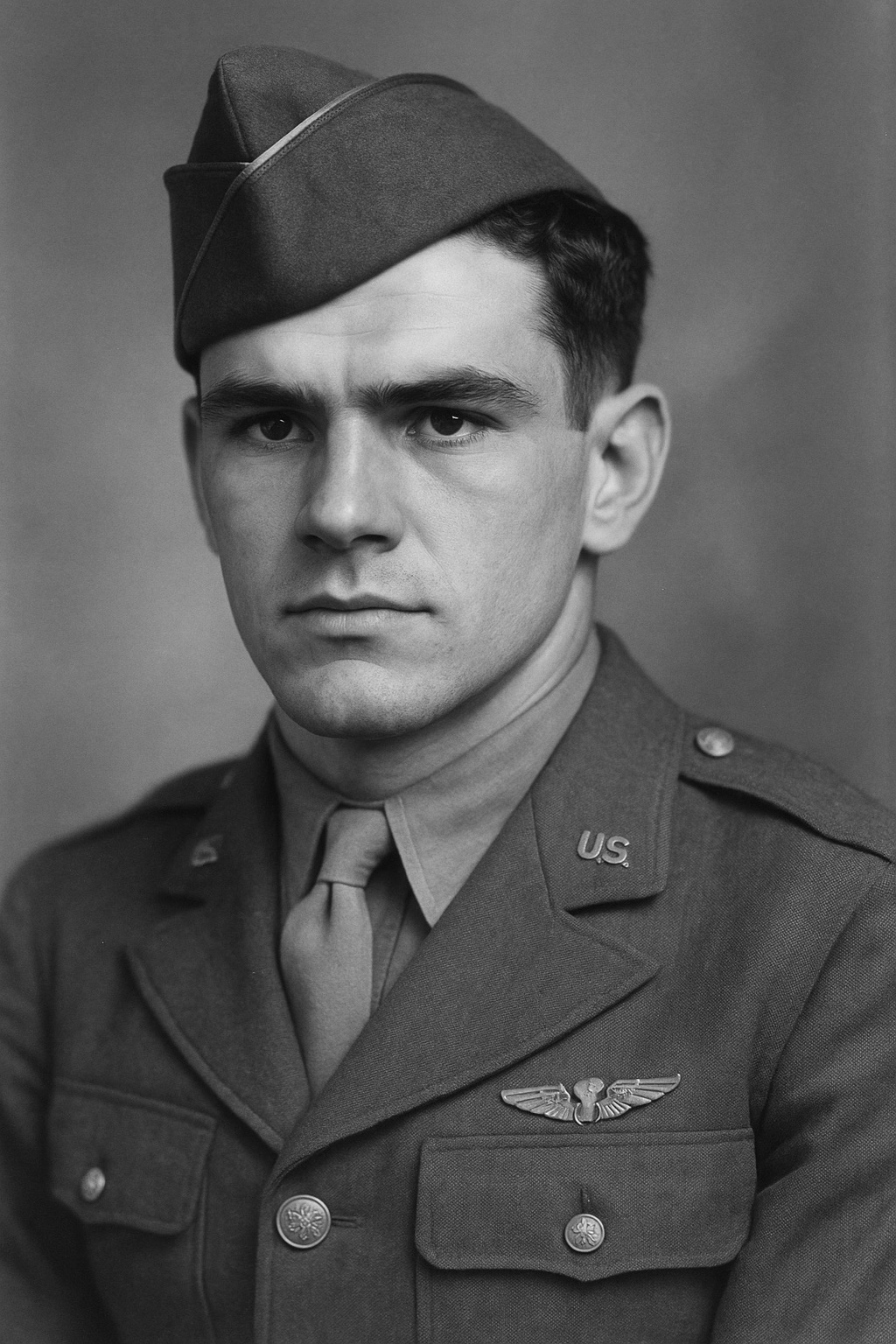 John St. John, 1943 (illustration from the family face; no photograph on file) | |
| Born | 2 July 1921, Stratford, Ontario (the family gives 2 June) |
|---|---|
| Died | 28 October 2006 |
| Resting place | Glen Abbey Memorial Park, Bonita, California |
| Allegiance | United States |
| Service | Army of the United States, Air Corps / Army Air Forces, 1941–1945 |
| Service number | 18044851 |
| Rank | Private (at enlistment) |
| Years of service | 22 December 1941 – about November 1945 |
| Occupation | Radio operator; Link-trainer instructor; foundry worker and union steward; painting contractor; portrait artist |
| Spouse | E. Janet Krug (m. 1943) |
| Children | Daniel St. John and a daughter (b. 1946) |
| Parents | Homer St. John; Alice Rose Pigeon |
| Relatives | Patricia St. John, Jane St. John, Robert John St. John, Phillip St. John (siblings); Paschal Pigeon and Catherine Foley (grandparents) |
John Homer St. John (2 July 1921 – 28 October 2006) was a Canadian-born American soldier, factory worker, union steward and amateur portrait artist.[1][2] Born in Stratford, Ontario, and raised in Michigan, he served in the Army Air Forces in the Second World War, by his family's account as a radio operator and Link-trainer instructor at Westover Field, Massachusetts, and then in England and Europe.[1][3] He was the father of Daniel St. John, the subject of The Book of Daniel, for whom he was the principal source of the family's stories of his youth and war.[3][4]
Early life
John St. John was born in Stratford, Ontario, on Saturday, 2 July 1921, the eldest child of Homer St. John, a First World War veteran, and Alice Rose Pigeon.[5][6][7] The family has given his birthday as 2 June;[1] the Stratford Daily Beacon's birth notice that week and his veteran's grave record both give 2 July. The notice names the baby "Phillip Homer, jr."; whether he was registered or baptised under that name has not yet been established.[5] His sister Patricia St. John was born about two years later.[8][9] During the 1920s or early 1930s the family moved to Michigan, and by 1935 it was living in Flint, where his brother Robert John St. John was born.[10][11] His father worked in the automobile industry.[12][13]
According to Daniel St. John, John was a gifted child: before he was fifteen he had been "identified ... as one of the top most promising gifted art students in the city of Detroit" through a New Deal programme that paid artists to teach young people, and he had perfect pitch.[14][15] Daniel also described a hard home life, in which Homer drank heavily and took John, from about fifteen, to bars to back him up in fights.[16] His brother Robert John died of pneumonia following measles in March 1939, when John was seventeen; in the family's telling John had been left to look after the boy and was blamed for his death.[11][17]
In the census of April 1940 John, aged eighteen, was living with his parents and sisters at 2012 Swayze Street, Flint; he had four years of high school and was working as a salesman in a shoe store.[10]
Travels and conviction
Daniel said that his father left home, "intolerable" as it was, and rode freight trains west with friends, boxing for money along the way.[18][19] In March 1941 John, then nineteen, was in New Mexico.[20] On 21 March 1941, in the District Court of Lincoln County, he and a co-defendant, Mirko Hamacek, were charged with taking an automobile belonging to Guy Richardson on 18 March "for the purpose of temporarily using and driving the same"; both pleaded guilty the same day, and Judge Numa C. Frenger sentenced each to not less than seven nor more than nine months in the state penitentiary and to pay the costs of prosecution.[21]
He was received at the New Mexico State Penitentiary in Santa Fe on 24 March 1941 as No. 10468; the prison record describes him as 5 feet 10½ inches tall, 140 pounds, with light-brown hair and grey eyes, born in Ontario, Catholic, a high-school graduate and a steam fitter's helper, with no previous convictions, and notes a three-inch cut scar on the left side of his jaw.[20] Daniel later said that his father's facial scar dated from a stolen car that "rolled ... off an embankment".[22]
The family remembered the episode as a term in an Arizona jail.[18][3] The Arizona State Archives found no names of boys held at the state industrial school at Fort Grant in its collections; the school's surviving annual reports are financial.[23] A volunteer at the Eastern Arizona Museum in Graham County, sending research leads in October 2026, likewise noted that no record yet established that he had attended or been held at Fort Grant.[24] In April 1940, the census found him at home in Flint.[10]
Military service
On 22 December 1941, fifteen days after the attack on Pearl Harbor, John enlisted in the Army of the United States as a private in the Air Corps, from civil life, for the duration of the war plus six months; his Army serial number was 18044851.[25] The enlistment card, indexed as "St Johns, John H", records his birth year as 1921, four years of high school, single, a semiskilled construction worker, and "citizen"; it was made in the Eighth Corps Area, and its undefined place and residence codes most probably stand for Phoenix and Maricopa County, Arizona.[25][26] The identification of the card with John is probable rather than proven, and its "citizen" conflicts with the 1940 census, which recorded him as an alien with first papers, and with the family's account that the St. Johns were still Canadians after the war.[10][27] According to Daniel, John had first been turned down by the Royal Canadian Air Force, and the Army would not let him train as a pilot because of his eyesight.[28][29] He scored very highly on the Army's intelligence test and was trained as a radio operator, taking Morse code at thirty-five words a minute.[29][30] In the winter of 1941–42 Air Corps recruits went through one of three replacement training centres (Jefferson Barracks, Keesler Field or Sheppard Field), and the principal radio school was at Scott Field, Illinois; where John trained is not recorded.[31]
By the winter of 1942–43 he was at Westover Field, Chicopee, Massachusetts, where, Daniel said, he trained pilots on the Link instrument trainer, won jitterbug contests and boxing matches, and played poker.[32][30][3] The Army's Link trainer instructor (MOS 658) relayed simulated radio-beam signals to the pilot in training.[33] At Westover that winter the main flying unit was the 326th Fighter Group, a P-47 operational training unit; no group or squadron moved from Westover to England between January and March 1943.[34] John's own unit has not been identified.[3]
At Westover he met E. Janet Krug, daughter of William Burnham Krug of South Hadley, and they married, in Daniel's account, around Valentine's Day 1943, after knowing each other two or three weeks; Janet's father objected because John was a Catholic.[35][36][32] Daniel said that John was sent to England just after Valentine's Day 1943 and was stationed there eighteen months.[32] Their son Daniel was born on 13 November 1943, while John was overseas.[37]
Daniel's account continued that John was parachuted into Normandy in the summer of 1944, served with "Patton's group" in the drive into Germany, and saw the liberation of concentration camps; no record has yet placed him in any unit or campaign.[38][39][3] The air command that supported Patton's Third Army was the Ninth Air Force's XIX Tactical Air Command, one of whose groups, the 362nd Fighter Group, had been activated at Westover on 1 March 1943.[34] After the German surrender he remained in France, living with a French family, managing German prisoners of war, and taking art classes "at the Louvre"; there, Daniel said, "they made a communist out of him".[40][41] He returned to the United States in about November 1945.[42] Daniel said he had received three Purple Hearts; no record of them has been found, and the Army's surviving hospital admission card files for 1942–1945, a large sample, hold no card under his serial number.[43][44][3]
Later life
After the war John joined his parents in San Jose, California, where he held Communist Party meetings at the house; in about 1946 a fight with his father forced the family to move back to Massachusetts.[45][46][47] His parents feared the attention, Daniel said, because they "still were not American citizens", and "the FBI was coming around"; Daniel also recalled his father's politics as "something he had the FBI after".[27][48] According to the family, John was at one time put out of the country, perhaps because of his political activities; no immigration record of it has been found.[49] Daniel described him in these years as suffering from what would now be called post-traumatic stress.[50] In April 1950 Janet and the two children were living with her parents in South Hadley, and the census entered her as separated.[51] Daniel's account was that John then moved the family to Mount Morris, near Flint, on the advice of his party comrades, and worked in an automobile foundry, where he was a union steward.[52][53] John was, in Daniel's word, "a Stalinist", and the revelations about Stalin in the mid-1950s, Daniel said, "set him drinking".[54][55] At some point he worked in a paper mill in Holyoke, where he drew portraits of fellow workers on sheets of paper pulp.[14]
The family returned to South Hadley in about 1955, and John later started a painting business and built a house near Amherst using the G.I. Bill.[54][55] In 1961, when Daniel had just graduated from high school, John left the family for Los Angeles, where he worked as a painting contractor; Daniel worked for him there in the summer of 1962 at five dollars an hour.[56][57] In 1967 he brought Janet to Daniel's home in Berkeley, California, where she lived with Daniel's family for the next eight years.[58] At his father's death in 1972 he was living in Costa Mesa, California.[59] At his mother's death in October 1983 he was living in Chula Vista, San Diego County.[60] He died on 28 October 2006, aged eighty-five, and is buried at Glen Abbey Memorial Park in Bonita, a few miles from Chula Vista; the Department of Veterans Affairs records him there as a United States Army veteran.[6][2] His death certificate has not yet been consulted.
Art
Daniel kept a number of his father's paintings and drawings, nine of which are reproduced in the book, seven of them signed.[3] "He could paint your picture," Daniel said. "He could draw your picture. He could do it in watercolor. He could do it in oil. And he would make it look better than you look."[14]
In the family's memory
Daniel said that his father told him a great deal, too young: "Things that you would not tell a six-year-old child, he would tell me, right?"[61] He first saw him at two:
"So when he got out, finally, it was my second birthday, let's say November 1945. I was two years old, right? And my father got out and we started, that was the first time I even saw him."[42]
Of the swimming lesson at a gravel pit near Mount Morris when Daniel was six: "He threw me in there. And I just went down. And I thought I was dead, you know. Then he fished me out. He said, well, better learn how to swim."[62] Of his gifts: "He would have been, I don't know what you say, what he could have been, but he could have done anything."[63]
In The Book of Daniel
John St. John is the subject of the chapter John St. John, which reproduces his prison card, the 1941 court file and his artwork, and he appears in Homer St. John, Childhood, College and the Paper Mill, Regina and Berkeley Again.[3][64]
References
- Daniel St. John, interview recording S5, 01:05:13 (family archive).
- St. Marys Museum & Archives (St. Marys, Ontario), research notes "Research Request – St. John", supplied 9 October 2026 (children of Homer St. John: "John Homer (1921–2006), born Canada")
- Rex St. John, The Book of Daniel (2026), chapter "John St. John".
- Daniel St. John, interview recording S5, 01:32:26 (family archive).
- "Born: St. John", Stratford Daily Beacon (Stratford, Ontario), 5 July 1921 (clipping supplied by the Stratford-Perth Archives, 26 October 2026).
- U.S. Department of Veterans Affairs, National Cemetery Administration, Nationwide Gravesite Locator, "St John, John H", US Army, born 07/02/1921, died 10/28/2006, Glen Abbey Mortuary, Bonita, California (searched 26 October 2026).
- Province of Ontario, marriage licence affidavit and registration (Form 3), No. 022528, Homer Doble St. John and Alice Rose Pigeon, Stratford, 4 October 1920 (St. Marys Museum & Archives).
- Daniel St. John, interview recording S5, 01:28:23 (family archive).
- 1950 United States Census, San Jose, Santa Clara County, California, enumeration district 73-91, p. 22, line 26, household of Homer St. John. FamilySearch. https://www.familysearch.org/ark:/61903/1:1:6XGZ-QV7G
- 1940 United States Census, Flint, Genesee County, Michigan, enumeration district 85-142A, sheet 7A lines 38–40 and sheet 7B lines 41–42, enumerated 10 April 1940. U.S. National Archives, NAID 127829462. https://catalog.archives.gov/id/127829462
- Archives of Michigan, Death Certificates 1897–1952: Robert John St. John, Genesee County, 13 March 1939. Michiganology. https://michigan.access.preservica.com/uncategorized/IO_adf4c6a3-d9f0-45d4-a320-fb7aad763890/
- Daniel St. John, interview recording S5, 01:48:28 (family archive).
- Daniel St. John, interview recording S5, 01:25:51 (family archive).
- Daniel St. John, interview recording S5, 01:37:04 (family archive).
- Daniel St. John, interview recording S5, 01:38:42 (family archive).
- Daniel St. John, interview recording S5, 01:27:18 (family archive).
- Daniel St. John, interview recording S5, 01:28:42 (family archive).
- Daniel St. John, interview recording S5, 01:30:02 (family archive).
- Daniel St. John, interview recording S5, 01:31:29 (family archive).
- New Mexico State Penitentiary, "Description of Convict", No. 10468, John St. John, received 24 March 1941 (family archive; image from an Ancestry member tree, printed 13 August 2020).
- District Court of Lincoln County, New Mexico (Third Judicial District), State of New Mexico v. John St. John, case 5235 (dismissed 21 March 1941), and State of New Mexico v. John St. John and Mirko Hamacek, case 5236 (information, ledger, docket and penitentiary commitments, 21 March 1941); copies supplied by the Twelfth Judicial District Court of New Mexico, 7 October 2026.
- Daniel St. John, interview recording S5, 01:32:54 (family archive).
- Arizona State Library, Archives and Public Records (Michaila Welch), reply to a reference request, ticket #19255964, 14 October 2026 (family archive; leads in facts/records/john-st-john/arizona_leads_2026-10-15.md).
- Lynda Bennett (volunteer, Eastern Arizona Museum, Pima, Arizona), "Fort Grant State Industrial School: Research leads for John St. John (1936–1941)", October 2026 (family archive; summary in facts/records/john-st-john/eastern_arizona_museum_leads_2026-10-16.md).
- National Archives and Records Administration, Access to Archival Databases, World War II Army Enlistment Records (Record Group 64), Electronic Army Serial Number Merged File: "St Johns, John H", serial 18044851, enlisted 22 December 1941. https://aad.archives.gov/aad/fielded-search.jsp?dt=893&cat=WR26&tf=F&bc=,sl
- Book-o-Matic research notes, "John St. John: units, schools and stations, Dec 1941 – 1945" (2026), §1b, decoding the enlistment card's place and residence codes from the AAD code list (cl_id 4123) and serial neighbours; an inference, not a decoded field.
- Daniel St. John, interview recording S5, 01:41:17 (family archive).
- Daniel St. John, interview recording S5, 01:33:10 (family archive).
- Daniel St. John, interview recording S5, 01:17:40 (family archive).
- Daniel St. John, interview recording S5, 01:19:46 (family archive).
- Wesley Frank Craven and James Lea Cate, eds., The Army Air Forces in World War II, vol. VI, Men and Planes (1955), ch. 16, pp. 528–531. https://www.ibiblio.org/hyperwar/AAF/VI/AAF-VI-16.html
- Daniel St. John, interview recording S5, 01:21:33 (family archive).
- War Department, TM 12-427, Military Occupational Classification of Enlisted Personnel (1944), p. 84 (MOS 658, Link Trainer Instructor). https://archive.org/details/TM12-427
- Maurer Maurer, ed., Air Force Combat Units of World War II (USAF Historical Division, 1961). https://archive.org/details/AirForceCombatUnitsOfWorldWarIi
- Daniel St. John, interview recording S5, 01:20:56 (family archive).
- Daniel St. John, interview recording S5, 01:02:30 (family archive).
- Daniel St. John, interview recording S5, 01:35:16 (family archive).
- Daniel St. John, interview recording S5, 01:23:40 (family archive).
- Daniel St. John, interview recording S5, 01:24:02 (family archive).
- Daniel St. John, interview recording S5, 01:40:22 (family archive).
- Daniel St. John, interview recording S5, 01:36:42 (family archive).
- Daniel St. John, interview recording S5, 01:39:32 (family archive).
- Daniel St. John, interview recording S5, 01:24:37 (family archive).
- National Archives, Record Group 112, Hospital Admission Card Files, 1942–1945, public-use data files (searched for serial 18044851, October 2026: no record). https://catalog.archives.gov/id/235111180
- Daniel St. John, interview recording S5, 01:38:59 (family archive).
- Daniel St. John, interview recording S5, 01:41:30 (family archive).
- Daniel St. John, interview recording S5, 01:44:05 (family archive).
- Daniel St. John, interview recording S5, 00:16:28 (family archive).
- Rex St. John, information to the editors, 10 October 2026 (family account).
- Daniel St. John, interview recording S5, 01:39:51–01:39:59 (family archive).
- 1950 United States Census, South Hadley, Hampshire County, Massachusetts, enumeration district 8-85, sheet 11, lines 5–11, enumerated 19 April 1950. U.S. National Archives. https://1950census.archives.gov/search/?county=Hampshire&ed=8-85&name=St%20John&page=1&size=20&state=MA
- Daniel St. John, interview recording S1, 00:43:01 (family archive).
- Daniel St. John, interview recording S1, 00:08:07 (family archive).
- Daniel St. John, interview recording S5, 01:52:14 (family archive).
- Rex St. John, The Book of Daniel (2026), chapter "Childhood".
- Daniel St. John, interview recording S5, 01:56:31–01:56:48 (family archive).
- Daniel St. John, interview recording S5, 01:57:19 (family archive).
- Daniel St. John, interview recording S5, 01:58:18 (family archive).
- "Homer St. John" (obituary), Mountain Democrat (Placerville, Calif.), 14 September 1972, p. 37, via NewspaperArchive. https://newspaperarchive.com/no-tag-clipping-sep-14-1972-6022379/
- "Alice R. St. John" (obituary), Mountain Democrat (Placerville, Calif.), 26 October 1983 (clipping supplied by the El Dorado County Historical Museum, 17 October 2026).
- Daniel St. John, interview recording S5, 01:32:48 (family archive).
- Daniel St. John, interview recording S5, 01:55:22 (family archive).
- Daniel St. John, interview recording S5, 01:38:37 (family archive).
- Rex St. John, The Book of Daniel (2026), chapter "Homer St. John".
Family
Parents: 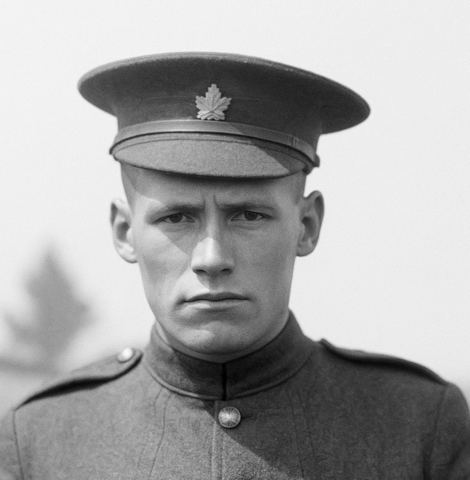 Homer St. JohnAlice Rose Pigeon
Spouse: E. Janet Krug
Children: 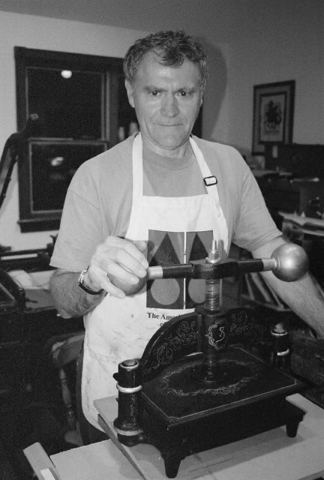 Daniel St. John