Burnham line · ancestor
Thomas Burnham
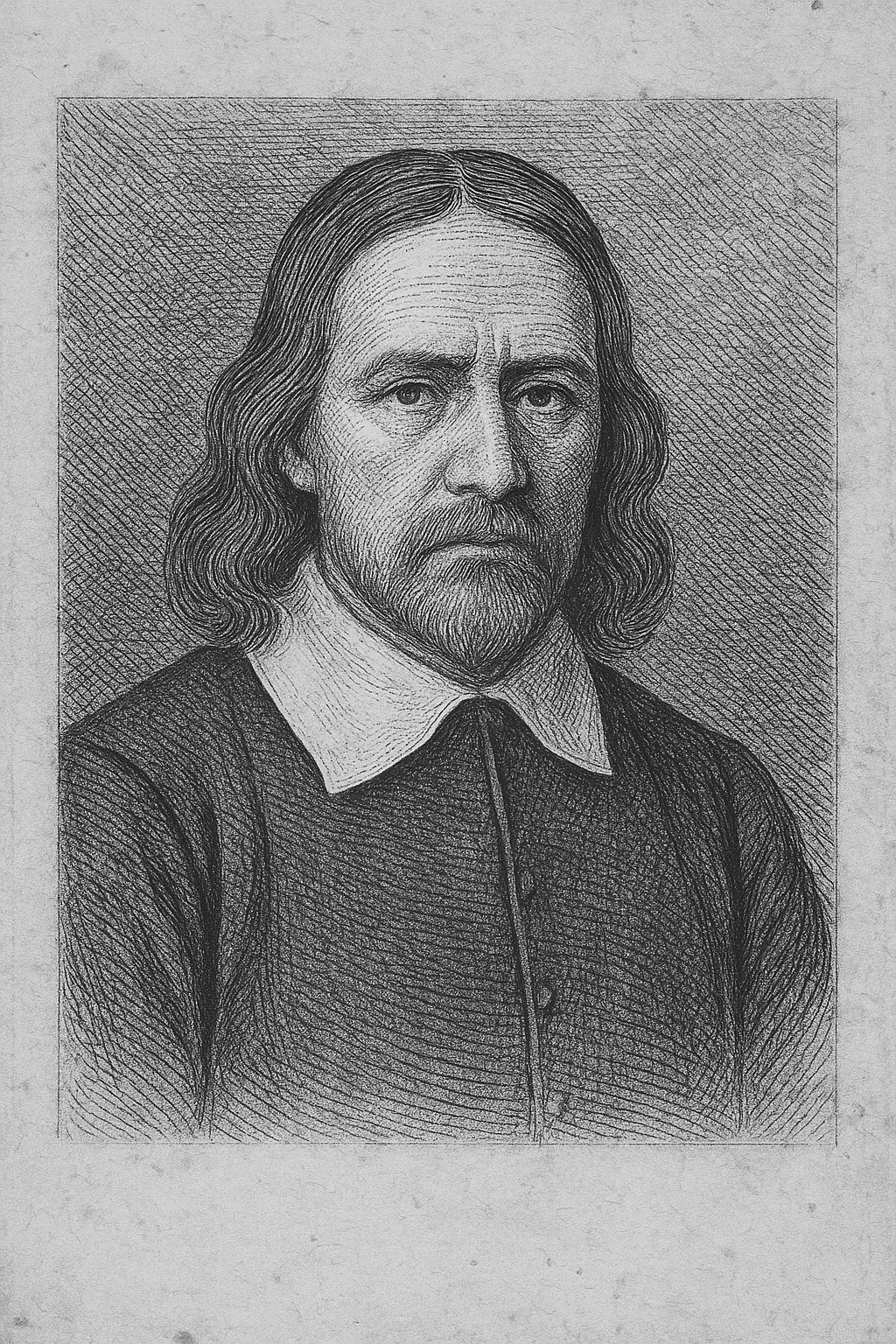 Thomas Burnham (illustration; no likeness survives) | |
| Born | about 1617, England |
|---|---|
| Died | 24 June 1688 (probate record; 28 June in the 1884 genealogy), Connecticut Colony |
| Residence | Hartford; later Windsor (Podunk), Connecticut Colony |
| Occupation | Planter; attorney in the colony's courts; constable of Hartford (1657) |
| Spouse | Anna (possibly Wright; died 5 August 1703) |
| Children | Elizabeth, Mary, Anna, Thomas, John, Samuel, William, Richard and Rebecca |
| Relatives | Erasthus William Burnham Jr (descendant, according to the 1884 genealogy) |
Thomas Burnham (about 1617 – 24 June 1688) was an English-born colonist of Hartford and Windsor in the Connecticut Colony who acted as an attorney in the colony's courts and acquired land from the Podunk people on the east side of the Connecticut River, in what is now East Hartford and South Windsor.[1][2][3] He is known chiefly from court, land and probate records, which show him repeatedly in litigation, and from a family genealogy published by a descendant in 1884.[4][5] That genealogy traces the South Windsor Burnhams, including Erasthus William Burnham Jr, to him; Daniel St. John regarded him as "most likely" the family's first American ancestor but called the connection "open".[6][7]
Origins
On 20 November 1635 a "Tho: Burnham", aged eighteen, was entered at Gravesend on a list of people to be transported to Barbados aboard the ship Expedition, having taken the oaths of allegiance and supremacy.[8] The 1884 genealogist judged this "undoubtedly" the same man, and so gave his birth year as 1617; he placed the family's English origins at Hatfield, Herefordshire.[9] No record proves either identification, and later genealogists have argued for a different baptism, at Long Crendon in Buckinghamshire in 1619, and against the Gravesend entry.[10] No record shows where he spent the years between 1635 and his first appearance in Connecticut. Daniel St. John, on the recordings for The Book of Daniel, gave his birth as "in the 1630s" and then as "let's say 1610".[7]
Hartford
He first appears in the colony's records on 7 December 1648, when the Particular Court at Hartford bound him in ten pounds that one Mathias Trott would appear at the next court.[11] On 6 September 1649 he gave a similar bond that "Rushmore, his man", who had been jailed for disorderly conduct in the meeting-house on the Sabbath, would appear and keep good behaviour.[12] In 1649–1651 he won small judgments for debt against John Bennett and Thomas Newell.[13] Hartford's land records, in an entry headed 1650, record his dwelling house on half an acre that had been part of the meeting-house lot, and over the following dozen years he bought meadow and woodland from neighbours.[14]
In February 1657 the town chose him "chimney looker" (fire inspector) for the north side, and in March he was sworn one of Hartford's two constables.[15][16] On 21 May 1657 he was made a freeman of the colony.[17]
Attorney
The 1884 genealogy describes him as educated, as having "practiced as a lawyer", and as "of a very determined character".[18] Connecticut at the time had almost no trained lawyers: those who spoke for others in court were "attorneys in fact", usually without legal training, allowed to plead by special permission, and the colony licensed no attorney at law until 1708.[19] On 5 October 1658 he appeared "as Attourney to Jer: Adams" in a suit against Samuel Wright Jr. of Northampton over a parcel of land, with damages claimed of a hundred pounds; the jury could not decide it and returned it to the bench.[3] At the same court Wright sued Burnham for a hundred pounds "for vniust molesting him in his Journey".[3] He lost a trespass suit in 1659 and a suit over rent in 1660, and in October 1659 the General Court summoned him "to answ for his former cariage complayned of".[20][21]
The Podunk lands
In 1658 or 1659 (one source says 1660) he and a partner, Jacob Mygatt, made a bargain with Tantonimo, a Podunk sachem, for land at Podunk.[22][23][24] In February 1660 the General Court ordered that "all the Podunk Indians shal peaceably enioy al their lands at Podunk" and appointed a committee to determine which land was Tantonimo's to sell, promising to confirm that part "to Thoms Burnam and his partners".[25] In April 1660 the committee found that part of the land belonged to the successors of another sachem, Foxen.[26] In March 1661 the court allowed him to farm the land while the Podunk were absent from it, on his promise to surrender it whenever they wished to return and plant it.[27]
On 8 August 1661 six Podunk men, Arramamet, Alyes, Mesequas, Taquis, Quanainpeweth and Mamowaage, described as "proper owners of all ye lands at Podunk", made over their right and title to "Thomas Burnam & his heirs" for "divers good Considerations & five Coats".[28] The deed, written in Burnham's own hand except for the sellers' marks and the witnesses' names, gives no acreage or bounds; it was witnessed by John Allyn and Bartholomew Barnard, and Arramamet's mark was a bow and arrow.[28][29] The 1884 genealogy reproduces it in facsimile.[28]
In November 1662 the town of Windsor, into whose bounds the Podunk land ran, agreed that he might buy there on condition that he not prejudice the Indians' rights or "molest the Indians", and that he build his house within Windsor.[30] By October 1662 Hartford's records described land at Podunk as "In ye management of Thom: Burnam: wher ye fort Stood".[31] In April 1663 he exchanged a parcel with "arramamat & podunk Indians" for one running down to the Podunk River.[14]
The Betts case
In March 1662 the General Court, acquitting a Mr. John Blackleach of contemptuous speech, remarked that "both Loveridge and Burnam" were suspected of the crime they testified to; the record gives this Burnam no first name.[32] In 1663 he took up the cause of Abigail Betts of Wethersfield, the wife of John Betts, who had said that "Christ was a Bastard and she could proue it by scripture", an offence that the colony's laws could punish by death.[33][34] At the Particular Court of 5 March 1663 the marshal, Jonathan Gilbert, complained of his "abusiue carriages" in the matter, and the magistrates found his conduct "very Scandalous lascivious and pernicious".[33] A fuller charge printed in the 1884 genealogy accused him of undertaking "to save her neck" and of having "seperated Husband and wife".[35] In a further plea he asked for "Justice according to Law", signing himself "a Subject and Denason of England".[36]
The court sent him to the prison keeper, took away his freedom of the colony, and forbade him to plead "any causes or cases in this Civil Court except his owne".[37] Abigail Betts was sentenced to be led to the gallows with a rope about her neck and then returned to her father's care.[37] Burnham appealed to the General Court, where a Mr. Pitkin pleaded for him, but the sentence was upheld.[38] He was readmitted to his freedom on 11 May 1665.[39]
Later disputes
In 1666 Jacob Mygatt sold his half of the Tantonimo purchase to William Pitkin and Bartholomew Barnard, who sought a division of the land; Burnham refused to give up possession.[40] According to the 1884 genealogy, his wife, "with a company of men and women", drove the new owners' workmen off the land.[41] A jury found for Pitkin and Barnard in October 1666, a second jury in March 1667 found for neither side, and in May 1668 the General Court confirmed Pitkin and Barnard in possession "against any clayme or pretence of claime from Thomas Burnam", allowing him only to reap the wheat and peas then growing.[40][42] The court refused to rehear the matter that October.[43]
By October 1669 he was listed among the freemen of Windsor.[44] In 1674 he recorded purchases of seventy-two acres from John Marsh, twelve from Thomas Blachley and sixty from John Church, and in 1675 Hartford described land "between Windsor Bownds & Thomas Burnams lott".[45][46] In February 1676, during King Philip's War, the Council ordered the inhabitants of the east side of the river into a few fortified houses, one of which was "Tho: Burnham's".[47] His son Richard served in the Narragansett expedition of 1675, according to the genealogy.[18] He was among the English heirs named in the will of Joshua, a son of Uncas, who had married Arramamet's daughter.[48][49]
In May 1678 he complained of an execution served on his land at Podunk, without result; in 1679 he bought about two acres "in Indian Meadow" from Shebosman and Noames for six pounds, and settled a dispute with William Williams by arbitration.[50][51][45] In 1682 a warrant required that he be warned "to forbarre any further meddling" with Podunk land above the Hartford–Windsor line; East Hartford's historian later wrote that "Burnham was not a man to acquiesce with the decision of any court".[52] In February 1687 he bought thirty-one acres from Richard Risley.[53] In May 1688 a Hartford town meeting appointed a committee "to treat with Thomas Burnham, senior, upon his claim to the lands on the East side the Great River".[54]
Death and will
He died on 24 June 1688, according to the probate record; the 1884 genealogy gives 28 June.[2][1] Shortly before his death he had John Allyn write his will, leaving his house and home lot to his youngest daughter, Rebecca, his ploughing land in Podunk Meadow to his sons Thomas, John and Samuel, other land to his daughters Mary Morton and Anna Gaines and a grandson, and small legacies to his sons Richard and William; his inventory came to £69 6s. 6d.[2] In 1690 his son-in-law William Mann complained that the will had never been exhibited, and his widow Anna wrote to Allyn, over her mark, that Mann had taken it "and put it in his pocit with out my Leveffe"; the court found that "the Will could not be found" and accepted Caleb Stanly's testimony to its terms.[2]
Family
He married Anna, whose surname the 1884 genealogist gave, with a question mark, as Wright; she died on 5 August 1703.[1] They had nine children: Elizabeth, Mary, Anna, Thomas, John, Samuel, William, Richard and Rebecca.[1] He made over much of his land to his children by deeds of gift that forbade its sale outside the family "except it be to some of his own brothers or their children".[27] His son William married Elizabeth Loomis at Windsor on 28 June 1671, and his son Thomas married Naomi Hull of Killingworth in January 1677.[55]
Descendants and legacy
In 1707 Hartford appointed a committee "To Treat with the Burnhams" over their claim to land on the east side of the river, and in 1719 his heirs and those of William Williams received three hundred acres in compensation for land cut off by the Windsor line.[56][57] In 1884 the genealogist described Burnham Meadow, "200 acres, more or less", across the line between East Hartford and South Windsor, as still largely held by his descendants.[58] The genealogy prints a line of descent from him through his son Thomas, Charles, Eleazur and Phineas Burnham to Erastus Williams Burnham (born 1810) of South Windsor and his son Erastus (born 1834), Daniel St. John's great-great-grandfather.[6] Probate records confirm the first links of the chain, but for the later generations the genealogy is the only authority found.[2][59] A biographical encyclopedia of about 1922 repeats the line.[60]
In the family's memory
Daniel St. John described him as "a lawyer who came over to Connecticut" who "actually bought a huge piece of land from the local Indians", land that "was almost the whole town of South Windsor".[7] Of the 1884 genealogy, which he had ordered, he said it "shows all the treaties even with the Indian signatures, their signs and the periods like how he wheedled these Indians to give him rights to that land".[7] On the descent he said: "So what is open is the connection between the ancestor Thomas, who was born in England and Let's say 1610. It's clear, but to find the direct, he has to be the direct ancestor because there's no other way that could have happened with the Burnham."[7] He added that "that land still stayed in the family all those years, though it was parceled to different sons and daughters", and that Thomas Burnham "was a noteworthy relative and everybody wants to see if they're related to him".[7][61]
In The Book of Daniel
He is the subject of the chapter Thomas Burnham.[62]
References
- R. H. Burnham, Genealogical Records of Thomas Burnham (1884), p. 121. https://archive.org/details/cu31924029819699
- Charles W. Manwaring, A Digest of the Early Connecticut Probate Records, vol. 1, 1635–1700 (Hartford, 1904), pp. 418–419 (estate of Thomas Burnham, died 24 June 1688). https://archive.org/details/digestofearlycon01manw
- Records of the Particular Court of Connecticut (1928), pp. 197–198. https://archive.org/details/connecticuthisto0022unse
- Records of the Particular Court of Connecticut, 1639–1663, Collections of the Connecticut Historical Society, vol. 22 (Hartford, 1928). https://archive.org/details/connecticuthisto0022unse
- Roderick H. Burnham, Genealogical Records of Thomas Burnham, the Emigrant, Who Was Among the Early Settlers at Hartford, Connecticut, 2nd ed. (Hartford: Case, Lockwood & Brainard, 1884). https://archive.org/details/cu31924029819699
- R. H. Burnham, Genealogical Records of Thomas Burnham (1884), pp. 121–124, 128–129, 145–146, 160–161, 185, 221 (entries nos. 1, 2, 8, 23, 49, 86, 158). https://archive.org/details/cu31924029819699
- Daniel St. John, interview recording S5, 00:39:38 (family archive).
- John Camden Hotten, The Original Lists of Persons of Quality … and Others Who Went from Great Britain to the American Plantations, 1600–1700 (London, 1874), pp. 139–140. https://archive.org/details/originallistsofp00hott
- R. H. Burnham, Genealogical Records of Thomas Burnham (1884), Preface and pp. 116–121. https://archive.org/details/cu31924029819699
- "Thomas Burnham", Wikipedia (consulted 2026), summarising C. Soughton in New England Historical and Genealogical Register 166 (2012) and M. Pitkin (2013, 2016). https://en.wikipedia.org/wiki/Thomas_Burnham
- Records of the Particular Court of Connecticut (1928), p. 55. https://archive.org/details/connecticuthisto0022unse
- Trumbull (ed.), Public Records of the Colony of Connecticut, vol. 1 (1850), pp. 194–195. https://archive.org/details/publicrecordsofc03conn
- Records of the Particular Court of Connecticut (1928), pp. 72–73, 103–104. https://archive.org/details/connecticuthisto0022unse
- Original Distribution of the Lands in Hartford among the Settlers, 1639, Collections of the Connecticut Historical Society, vol. 14 (Hartford, 1912), pp. 417–419 and note. https://archive.org/details/collectionsofcon14inconn
- Hartford Town Votes, vol. 1, 1635–1716, Collections of the Connecticut Historical Society, vol. 6 (Hartford, 1897), p. 115. https://archive.org/details/connecticuthisto06conn
- Records of the Particular Court of Connecticut (1928), p. 174. https://archive.org/details/connecticuthisto0022unse
- Trumbull (ed.), Public Records of the Colony of Connecticut, vol. 1 (1850), pp. 296–297. https://archive.org/details/publicrecordsofc03conn
- R. H. Burnham, Genealogical Records of Thomas Burnham (1884), p. 31. https://archive.org/details/cu31924029819699
- J. Hammond Trumbull (ed.), The Memorial History of Hartford County, Connecticut, vol. 1 (Boston, 1886), pp. 118–119. https://archive.org/details/memorialhistoryo01trum
- Records of the Particular Court of Connecticut (1928), pp. 202–203, 220–221. https://archive.org/details/connecticuthisto0022unse
- Trumbull (ed.), Public Records of the Colony of Connecticut, vol. 1 (1850), p. 340. https://archive.org/details/publicrecordsofc03conn
- R. H. Burnham, Genealogical Records of Thomas Burnham (1884), pp. 38, 122. https://archive.org/details/cu31924029819699
- Trumbull (ed.), Memorial History of Hartford County, vol. 2 (Boston, 1886), p. 86. https://archive.org/details/memorialhistoryo02trum
- R. R. Hinman, A Catalogue of the Names of the First Puritan Settlers of the Colony of Connecticut (Hartford, 1846), p. 121. https://archive.org/details/catalogueofnames03hinm
- Trumbull (ed.), Public Records of the Colony of Connecticut, vol. 1 (1850), pp. 344–345. https://archive.org/details/publicrecordsofc03conn
- Trumbull (ed.), Public Records of the Colony of Connecticut, vol. 1 (1850), pp. 345–346. https://archive.org/details/publicrecordsofc03conn
- R. H. Burnham, Genealogical Records of Thomas Burnham (1884), pp. 39–40, with facsimile facing p. 38. https://archive.org/details/cu31924029819699
- R. H. Burnham, Genealogical Records of Thomas Burnham (1884), pp. 40–41 and note, with facsimile of the deed of 8 August 1661 facing p. 40. https://archive.org/download/cu31924029819699/cu31924029819699.pdf
- Joseph O. Goodwin, East Hartford: Its History and Traditions (Hartford, 1879), p. 28. https://archive.org/details/easthartforditsh00good
- Henry R. Stiles, The History and Genealogies of Ancient Windsor, Connecticut, vol. 1 (Hartford, 1891), pp. 549–550. https://archive.org/details/historygenealogi01stil
- Original Distribution of the Lands in Hartford (1912), p. 507. https://archive.org/details/collectionsofcon14inconn
- Trumbull (ed.), Public Records of the Colony of Connecticut, vol. 1 (1850), pp. 376–378. https://archive.org/details/publicrecordsofc03conn
- Records of the Particular Court of Connecticut (1928), pp. 162, 265, 268. https://archive.org/details/connecticuthisto0022unse
- J. Hammond Trumbull (ed.), The Public Records of the Colony of Connecticut, vol. 1, 1636–1665 (Hartford, 1850), p. 77 (capital laws, 1642). https://archive.org/details/publicrecordsofc03conn
- R. H. Burnham, Genealogical Records of Thomas Burnham (1884), pp. 55–56. https://archive.org/details/cu31924029819699
- R. H. Burnham, Genealogical Records of Thomas Burnham (1884), pp. 57–58. https://archive.org/details/cu31924029819699
- Records of the Particular Court of Connecticut (1928), pp. 267–269. https://archive.org/details/connecticuthisto0022unse
- Trumbull (ed.), Public Records of the Colony of Connecticut, vol. 1 (1850), pp. 393–394. https://archive.org/details/publicrecordsofc03conn
- Trumbull (ed.), Public Records of the Colony of Connecticut, vol. 2, 1665–1678 (Hartford, 1852), pp. 17–18. https://archive.org/details/publicrecordsofc00unse
- Trumbull (ed.), Public Records of the Colony of Connecticut, vol. 2 (1852), pp. 64–65 and note. https://archive.org/details/publicrecordsofc00unse
- R. H. Burnham, Genealogical Records of Thomas Burnham (1884), pp. 122–123. https://archive.org/details/cu31924029819699
- Trumbull (ed.), Public Records of the Colony of Connecticut, vol. 2 (1852), pp. 84–85. https://archive.org/details/publicrecordsofc00unse
- Trumbull (ed.), Public Records of the Colony of Connecticut, vol. 2 (1852), p. 101. https://archive.org/details/publicrecordsofc00unse
- Trumbull (ed.), Public Records of the Colony of Connecticut, vol. 2 (1852), pp. 518–520 (freemen of Windsor, October 1669). https://archive.org/details/publicrecordsofc00unse
- Original Distribution of the Lands in Hartford (1912), pp. 510–511. https://archive.org/details/collectionsofcon14inconn
- Hartford Town Votes (1897), pp. 172–173. https://archive.org/details/connecticuthisto06conn
- Goodwin, East Hartford (1879), pp. 32–33. https://archive.org/details/easthartforditsh00good
- R. H. Burnham, Genealogical Records of Thomas Burnham (1884), pp. 41, 122. https://archive.org/details/cu31924029819699
- Trumbull (ed.), Memorial History of Hartford County, vol. 2 (1886), p. 87. https://archive.org/details/memorialhistoryo02trum
- Charles J. Hoadly (ed.), The Public Records of the Colony of Connecticut, vol. 3, 1678–1689 (Hartford, 1859), pp. 4, 14. https://archive.org/details/publicrecords03conn
- Stiles, History and Genealogies of Ancient Windsor, vol. 1 (1891), p. 132. https://archive.org/details/historygenealogi01stil
- Goodwin, East Hartford (1879), p. 69. https://archive.org/details/easthartforditsh00good
- Original Distribution of the Lands in Hartford (1912), p. 511. https://archive.org/details/collectionsofcon14inconn
- R. H. Burnham, Genealogical Records of Thomas Burnham (1884), pp. 41, 124. https://archive.org/details/cu31924029819699
- Edwin Stanley Welles, Births, Marriages and Deaths Returned from Hartford, Windsor and Fairfield, and Entered in the Early Land Records of the Colony of Connecticut (Hartford, 1898), pp. 13–14. https://archive.org/details/birthsmarriagesd00well_1
- Hartford Town Votes (1897), p. 287. https://archive.org/details/connecticuthisto06conn
- Trumbull (ed.), Memorial History of Hartford County, vol. 2 (1886), p. 90. https://archive.org/details/memorialhistoryo02trum
- R. H. Burnham, Genealogical Records of Thomas Burnham (1884), pp. 37 n., 106. https://archive.org/details/cu31924029819699
- Manwaring, Digest of the Early Connecticut Probate Records, vol. 2, 1700–1729 (Hartford, 1904), pp. 478–479 (will of Thomas Burnham the younger, 1726). https://archive.org/details/digestofearlycon02manw
- William Richard Cutter (ed.), Encyclopedia of Massachusetts, Biographical–Genealogical (New York: American Historical Society, c. 1922), article "Burnham, Erastus Devine", pp. 365–368. https://archive.org/details/encyclopediaofma03incutt
- Daniel St. John, interview recording S5, 00:41:37 (family archive).
- Rex St. John, The Book of Daniel (2026), chapter "Thomas Burnham".
Family
No parents, spouse or children recorded yet.